miércoles, 27 de mayo de 2015

Justicia y Mercado, mercancía de monopolio

La justicia como mercancía. Mercadomonopólico en el Perú

Introducción


La corrupción en el sistema judicial peruano es un hecho conocido que hoy se caracteriza por la mayor amplitud y profundidad de la decisiones  judiciales cuestionables como y los efectos pernicioso a corto y largo plazo sobre la sociedad peruana. La sociedad ha exigido reformas del sistema judicial pero ningún gobierno ha tenido la voluntad, argumentos o capacidad moral para concretar esta reforma  porque parte dela estrategia política es mantener el statusquo de la corrupción para evitar castigos posteriores por hechos ilegales cometidos durante el periodo del ejercicio del poder. Aunque algunos jueces han sido destituidos, han fugado  o están en la cárcel, pero una gran cantidad prosigue con sus estropicios amparados en la protección que les proporciona la “solidaridad de sus pares"; los pocos sancionados perdieron ese apoyo o no compartieron los  beneficios de la inmoralidad.

Algunos personas, en un reclamo por mayor presupuesto para el Poder judicial, afirman con ingenuidad o ironía que los “administradoresdel poder desconocen la trascendencia histórica de la función judicial” (Monroy, 2003). Trascendencia si, por el impacto negativo  continuo ycreciente de las decisiones judiciales, mas no por la actitud correcta para administrar justicia verdadera. En todo caso, si es correcto afirmar que existe intrascendencia jurídica del poder judicial.

El problema no es la falta de presupuesto, ya que otra opinión tomada de muchas que comporten la idea es que “en los últimos cuatro años los ingresos de esa institución (el poder judicial) crecieron más del 100%, se ha incrementado el número de jueces en 40%, las oficinas judiciales se han informatizado, pero paradójicamente  la productividad ha caído en 20% (de Althaus, 2010). Es decir a másrecursos menos resultados, por lo que la excusa del presupuesto  limitado es insostenible.

Por otra parte, Monroy (2012, p. a7) habla de la miseria del derecho en el Perú aludiendo a la facilidad con que se compran o consiguen  los títulos de abogados en las universidades que se multiplican en el Perú, formado “abogados mediocres y sin base deontológica”. Naturalmente estos abogados sin competencias profesionales reales aspiran a ocupar una plaza o puesto en elpoder judicial, donde la jurisprudencia está ausente a la vez que la codicia e insanía moral son requisitos básicos.El sector privado está fuera de sus aspiraciones si se piensa en la necesidad de contar con capacidades profesionales auténticas.

La corrupción, la mentalidad mercantilista, la vocación expoliadora  son aspectos que caracterizan a los que se comportan como vendedores de un servicio vital para la sociedad, la justicia. Es vital para una sociedad que quiere ser  desarrollada  pero el envilecimiento judicial condena a esta sociedad al atraso y miseria moral.
La justicia como mercancía y el Monopolio

Los casos en que se impuso la vocación mercantilista, al abuso, la corrupción llenarían volúmenes equivalentes a varias guías telefónicas, por ello la evidencia empírica es abundante para sustentar el afirmado anterior. Lo que se intenta ahora es realizar un análisis desde el punto vista económico de un mercado con características determinados.

Para hablar de mercado debemos tener una mercancía, un bien o servicio que se venden a quien está dispuesto a pagar para adquirirlo (bienes) o ser beneficiados por sus uso y  efectos (servicios).

En un mercado de bienes o servicios, existen dos agentes que interactúan para determinar el precio y la cantidad de equilibrio;  es decir, la cantidad y el precio en la que ambos tienen necesidades e intereses coincidentes. En la figura 1 corresponde al punto E, con P* y Q* como cantidades de equilibrio. Fuera del punto de equilibrio se produce exceso de demanda o excedo de oferta, en el primero el consumidor debe iniciar el proceso de ajuste ofreciendo mayor pago, en el segundo el oferente o productor debe bajar gradualmente el precio para atraer más consumidores o compradores. En teoría, el ajuste es espontáneo y depende de la decisión de los compradores  y vendedores. El equilibrio esla mejor situación para todos.


En unmonopolio existe la curva dedemanda pero no la de oferta por lo que no puedeproducirse este fenómeno de ajuste espontáneo. Sin embargo, debe ofrecerse  una cantidad quese vende  a un precio. En este caso, es el productormonopolistaquiendecidecual  es punto.

El objetivo del monopolista es la maximización del beneficio, la diferencia entre ingresos y costos, es decir:

B = IT – CT = P*Q – CT

B= beneficio, P= precio unitario, Q = cantidad, CT = Costo total

La regla de decisión en el caso del monopolista es la igualdad del costo marginal y el ingreso marginal pero el precio se fija en el nivel correspondiente al ingreso medio, a diferencia del mercado competitivo donde se iguala ingres marginal y costo marginal y el precio es el que corresponde a esa igualdad. En el gráfico 2 se observa que aunque se determina la cantidad de equilibrio Q* donde el ingreso marginal iguala al costo marginal (MR = MC) el precio es mayor del que corresponde a esa igualdad.


En la vida real, los costos de producción aumentan a medida que se expande volumen de producción, por lo que las curvas de costo total y marginal son crecientes en el tramo relevante; pero existen casos en que los costos totales son proporcionales al volumen y los costos marginales son constantes, por lo que se representan con una recta horizontal. La demanda de mercado tiene la forma  convencional con pendiente negativa y el ingreso marginal también con una pendiente que es el doble de la correspondiente al ingreso medio o demanda. En el gráfico 3 se puedeverse esta situación particular


Enfocando la atención en el sistema dejustica, y con la confirmación de que la justicia es una mercancía y que sistema judicial (poder  judicial o su equivalente) es el monopolio que lo ofrece en el mercado, veremos que en la práctica, éste ejerce la potestad de realizar discriminación de tercer grado al contar con dos mercados, en los cuales puede fijar precios diferentes por ser diferente la elasticidad de las curvas de demanda.

El primer mercado (parte derecha de la figura 4)tiene la demanda elástica, representa la demanda de servicios judiciales por parte de las persona honestas. El precio que deben pagar es el de los costos judiciales legales y trasparentes, por lo que el sistema judicial (el monopolio judicial) ofrece una cantidad baja. Es decir, los fallos judiciales para el demandante que sonjustos, legales y transparentesy favorecen al que tiene la razón, son limitados en cantidad. El monopolista gana poco en este mercado por ello la cantidad ofrecida esmenor.

En el mercado 2, la elasticidad de la demanda es baja pues el comprador o demandante(los deshonestos) está dispuesto apagar más por los servicios judiciales (el fallo favorable a sus intereses, aunque este violentando las leyes) En este caso, la posibilidad de ganancia es alta y el vendedor o productor (juez) tiene la propensión a ofrecerle más servicios. En otras palabras, es más fácil encontrar a unjuezatendiendo y sentenciando a favor de una persona deshonesta que favorde una persona honesta.

El consumidor llamado “persona deshonestas” incluyen una amplia  gama de personajes: Delincuentes comunes, asesinos, secuestradores, sicarios, narcotraficantes, contrabandistas, funcionarios públicos de alto nivel  e incluso ex presidentes, acusados de corrupción, asícomootros jueces que perdieron la “protección divina”. Este grupo en países  como el Perú, se expande   continuamente por lo que la posibilidad de ganar haciendo discriminación de tercer tipo es mayor para los ofertantes (sistema judicial).


En el mercado monopólico de un bien, los mercados pueden estar separados físicamente; en el caso del negocio de la justicia, los demandantes de los dos mercados (personas honestas y deshonestas) pueden concurrir  al mismo espacio físico donde actúa el ofertante (juez).

Una persona que quiere recuperar un terreno o vivienda de su propiedad usurpada  por un delincuente está dispuestaa pagar los derechos y gastos legales, mas no pagos encubierto porque “tiene el derecho y la ley a su favor”,  puede demostrar con pruebas contundentes que el terreno o vivienda son suyos, y confía en la justicia. El delincuente, el usurpador sabe que tiene la ley en su contra, pero por tener ingresos ilegales de muchas acciones dolosas anteriores, tiene al “juez a su favor o a su lado”; además sabe que el fallo o decisión judicial le será favorable; no confía, tiene la certeza.

Y estará dispuesto  apagar más. En el mismo espacio físico, dos demandantes con diferentes curvas de demanda; el ciudadano honesto tiene a favor la ley pero es el perdedor, el deshonesto tiene su favor al juez y es el ganador. El mercantilismo se ha impuesto y la discriminación de tercer grado se hace realidad en la venta de un servicio llamado “justicia”.

Referencias

De Althaus, Jaime (2010) Cambiar el poder judicial
El Comercio, 26 de marzo del 2010, sección A

MonroyGálvez, Juan (2003) “¿Se busca prescindir del Poder judicial?
El Comercio, 2003, sección A

Monroy Gálvez, Juan (2012) La miseria del derecho en el Perú
El Comercio, 9de enero de 2013, sección A, p. a7

Nicholson, Walter;  Snyder Christopher (2008) MICROECONOMIC THEORY. BASIC PRINCIPLES AND EXTENSIONS

Thomson South Western, TENTH EDITION; USA

lunes, 18 de mayo de 2015

Progress of a country, leadership, vision -carrier Metaphor

The vision and firm government, conditions for development of a country. Metaphor carrier

 
Introduction

On March 23, 2015 died Lee Kuan Yew, called the "founding father" of modern Singapore; who came to power in 1959 and made this small territory into a giant in terms of economic performance and development. For many it was a visionary and a leader with an iron hand, for others an authoritarian ruler. For all is undeniable his driving ability and the results achieved in this country. The development of a country is the holy grail of the rulers and the people, for this you need against previous basic elements without which this condition is crazy or an inordinate desire.

Governments must be leaders with a vision of greatness that moves to its personal conduct and government, with an oriented people sharing his vision of grandeur and that makes commitments and is aligned firmly and consistently with the major objectives. In short, the leader and the people governed should share a national ethos of greatness, development, work and cooperation.

Economic growth through is get by optimal and planned exploitation of natural resources and historical riches that the country possesses. Natural resources are the seas, farmland, mines, forests, oil and gas fields, nature reserves, historic and cultural riches are the historic centers surviving peoples in the past built their civilizations.
Training, development and use of the full capabilities of the country's population; so it will be possible wisely and efficiently utilize available resources, to achieve economic growth that will provide support to development.

In exceptional cases where the natural and historical riches are not present, but the ethos of greatness overcomes this limitation with the vast array of creative ability of its people to create wealth and achieve tangible and intangible, which supports the growth and thus development. These people are destined for development and a prosperous future for its people. The most notorious case is that of Singapore, perhaps the only one in the modern age or older.

There are numerous cases where there exists the wealth without but at the same time is absent the ability to use it, imagination or potential hidden in them. They are backward countries, whose fate is uncertain.

An aircraft carrier is a ship with immense proportions in every sense: the mass of the vessel, the fuel that allows scrolling, the crew, the complexity of relations between the crew and the leaders, the need for a path and purpose. The presence of a boss who also fully understands the characteristics of their ship, its crew, opportunities and threats in the environment, the strengths and weaknesses of your ship and people efficiently and effectively exercise its role of leader is needed. Weakness or lack of attributes determine the failure of the mission; return home without achieving goals or simply destruction. In a sense, running a large aircraft carrier is like running a country. (US Navy Truman)


The unique situation of Singapore

The amazement for Singapore situation leads to ask why they achieved this level of development?  What resources or factors have succeeded? How do they do it?

The answer is simple and is geared directly to the leadership of the country, if we understand that a country is like a ship. This well-built ship has an orderly, disciplined crew, aware of their roles, which strictly follows the rules imposed by a captain or guide. These rules are not arbitrary because reflect the need to reach a goal, achieve neither personal nor useful for the captain only, social, collective destiny.
The guide has certainly charisma and credibility, has a right and proper dealings with the population, acts consistently fulfilling himself the rules that are validated for the crew, knows the course, knows the dangers that arise when they deviate from the route, and most importantly, knows the destination and reason are directed toward it.

Singapore is like an aircraft carrier, well built, well managed, with a highly trained crew who know their role, their place in the group, which relies on its leader, who knows his destination. The great captain of that ship called Singapore was Lee Kuan Yew, who not only created and designed this ship, but clearly defined destination and the route to follow.


There are attributes of visionary recognized by many and character of authoritarian by other, the following article demonstrates that the vision and authoritarianism, which really correspond to the firmness and consistency in government affairs, are not opposites, on the contrary both are necessary and functional whenever the ethos of national greatness is present.
In Figure 1 it shows that the vision and authoritarianism are complementary when vision is of grandeur (visionary leader, authoritarian); when there is no vision but authoritarianism,  the results are not expected in terms of growth or development.


Some countries shown based on degrees of vision and development, the development line is also indicated. Above this line, vision regulates or limits the negative conditions that may appear depending on authoritarianism. Singapore and South Korea were organized by leaders with vision and authoritarianism, both are developed. Countries with less authoritarianism but with a definite vision of what they want also located also above line of development (Germany, Chile, Israel, and USA).

At the bottom it is observed that countries with different degrees of authoritarianism but lacking a vision do not achieve the desired development. Economic growth may be present, although it is clear that only the sale of goods and services does not improve the conditions of a society.


In Figure 3 we can see which are the principles, standards, compliance with laws which also explains the results of a vision and a strong government; these principles go beyond the person or leader who was eventually in charge of the country. In undeveloped countries, the principles at the level of individuals or institutions are absent, are only lyrical pronouncements, but not moral boosters right actions.


Warlords, leaders of revolts, each other's happened and you never know where they're going. Government actions are not guided by principles but by dogmas, beliefs created and imposed by the misleaders. They think they are predestined, sent from heaven, rebuilders of the country, saviors of the people and much more.

This situation guides the imagination to pirate ship where the greed for loot continuously generates riots, everyone wants to own fortune, and we continually walk to drift or changing course. A favorable wind can drive the pirate ship apparently the desired port, regardless of who is the captain; when there is no wind the ship just becomes uncontrolled and uncertain.


For several years, Lee Kuan Yew was no longer head of government but their successors maintain their vision and the course of his ship. Just in case a madman, schizophrenic or addicted to hallucinogens holds the office of head of state in Singapore, the ship will crash and inevitable will sink.


The graph 4 confirms the association between leadership, monitoring principles, vision, firmness of the government and hence people development


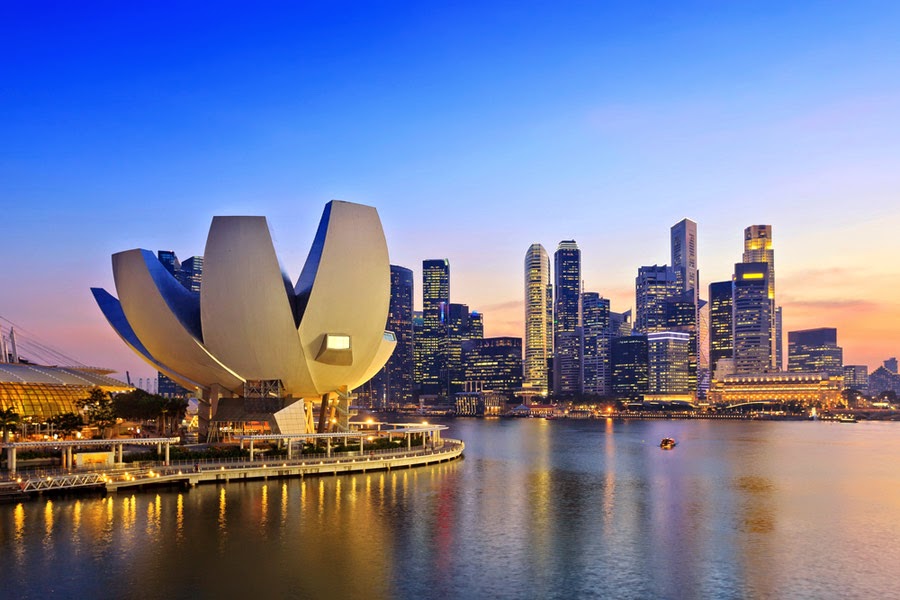
Some images of Singapore show that modernity and development are visible in the order, cleanliness, care of the environment, in the skyline.


By contrast, in countries below the line of developing the disorder, the apparent modernity, poverty and hopelessness are the constants in life. These countries have vast natural resources, huge potential historic resources, but a lack of vision and strong rule, political stability, a shared vision that transcends the ruler or government groups in power, hinder progress safely and securely. Their destination is the failure (the ship sinks, crashing against the rocks or remains adrift)
As a final thought, it can be argued that there are no excuses for avoid the effort to get the development of a country. The attribution of responsibilities to others is one sign of incompetence from seudo leaders, are excuses to justify their predatory acts against their peoples. Anyone cannot be guiding an enormous aircraft carrier; anyone cannot be ruler of a country unless the elected destination was failure, misery, moral and spiritual degradation.


The stark reality of Caracas and other Venezuelan, cities or any other country rich in resources, but poor ethos.

Image from Peru. This scene is more common than is supposed, may be the principal or any inner city.
 

sábado, 16 de mayo de 2015

Progreso de un país, liderazgo, visión-Metáfora portaaviones


La visión y el gobierno firme, condiciones para el desarrollo de un país. Metáfora del portaaviones

Introducción


El día 23 de marzo de 2015 falleció Le Kuan Yew, llamado el “padre fundador” del Singapur moderno; que llegó al poder en 1959 y convirtió a este pequeño territorio en un gigante en términos de desempeño económico y desarrollo. Para muchos fue un visionario y líder con mano férrea, para otros un gobernante autoritario. Para todos es innegable la capacidad de conducción y los resultados logrados.

El desarrollo de un país es el santo grial de los gobernantes y los pueblos, para ello es necesario contra con elementos previos básicos, sin los cuales esta condición es una locura oí un deseo desmesurado. 

Los gobernantes deben ser líderes, con una visión de grandeza que se traslada a sus actos personales y de gobierno, con un pueblo orientado que comparte su  visión de grandeza y  que además es seguidor que comparte sus ideas, asume compromisos y se alinea de manera férrea y consistente con los grandes objetivos. En resumen, el líder y el pueblo gobernado deben compartir un ethos nacional de grandeza de desarrollo, de trabajo, de cooperación.

El crecimiento económico a través del empleo óptimo y planificado de los  recursos o riquezas naturales o históricas que posee el país. Las riquezas naturales son los mares, campos agrícolas, minas, bosques, yacimientos de hidrocarburos, reservas naturales, las riquezas históricas o culturales son los centros históricos que sobreviven a los pueblos que en el pasado construyeron sus civilizaciones.

La formación, desarrollo  y uso de las capacidades plenas de la población del país; con lo que será posible emplear sabiamente y con eficiencia los recursos disponibles, para lograr el crecimiento económico que servirá de sustento al desarrollo.

Excepcionalmente se presentan casos en los que las riquezas naturales o históricas no existen, pero el ethos de grandeza supera esta limitación con el despliegue inmenso de la capacidad creativa de su gente y lograr crear la riqueza, material e inmaterial, que apoya el crecimiento y por ende el desarrollo. Estos pueblos tienen como destino el desarrollo y un futuro de prosperidad para su población. El caso más notorio es el de Singapur, quizás el único en la era moderna o antigua.

Son numerosos  los casos en que las riquezas  existen sin que haya al mismo tiempo la voluntad, capacidad o imaginación para emplear el potencial oculto en ellos. Son países atrasados, cuyo destino es incierto.

Un portaviones es una nave con proporciones inmensas en todo sentido: la masa del buque, el combustible que permite el desplazamiento, la tripulación, la complejidad de las relaciones entre la tripulación y los jefes, la necesidad de contar con una ruta y un propósito. Es necesaria la presencia de un jefe que además de conocer totalmente las características de su nave, de su tripulación, las oportunidades y amenazas del entorno, las fortalezas y debilidades de su nave y gente, ejerce con eficiencia y eficacia su rol de líder. La debilidad o carencia de los atributos determinará el fracaso de la misión, el retorno a casa sin lograr objetivos o simplemente la destrucción. En cierto sentido, dirigir un gran portaviones es como dirigir un país.


La situación singular de Singapur

El asombro que causa la situación de Singapur conduce a preguntar ¿Por qué lograron este nivel de desarrollo¿ ¿Con qué recursos o factores lo ha conseguido? ¿Cómo lo hicieron?

La respuesta es sencilla y se orienta directamente a la conducción del país, si entendemos que un país es como una nave. Esta navío bien construido, tiene una tripulación ordenada, disciplinada, consciente de sus roles, que sigue escrupulosamente la reglas impuestas por un capitán o guía. Estas reglas no son arbitrarias pues obedecen a la necesidad de llegar a una meta, alcanzar un destino colectivo, social, no personal ni útil únicamente para el capitán.

El guía, además de carisma y credibilidad, tiene un trato justo y apropiado con la población, actúa de manera coherente cumpliendo él mismo las reglas que son validadas para la tripulación, conoce el rumbo, conoce los peligros que se presentan cuando se desvían de la ruta , y lo más importante , conoce el destino y la razón por la que se dirigen hacia allá.

Singapur  es como un portaviones, bien construido, bien dirigido, con una tripulación altamente capacitada que conoce su rol, su lugar en el conjunto, que confía en su líder, que conoce su destino. El gran capitán de esa nave llamada Singapur fue Lee Kuan Yew, quien no solo creó y diseñó esta nave, sino que definió con claridad el destino y la ruta que debía seguir.


Existen los atributos de visionario reconocido por muchos y el carácter de autoritario atribuido por otros, en el siguiente artículo se demuestra que la visión y el autoritarismo, que corresponden a la  firmeza y coherencia en los asuntos de gobierno, no son opuestos, por el contrario, ambos son necesarios y funcionales  siempre que esté presente el ethos de grandeza nacional.

En la gráfica 1 se muestra que la visión y el autoritarismo se complementan   cuando la visión es de grandeza (líder visionario, autoritario); cuando  no existe la visión pero si el autoritarismo, los resultados no son los que se esperan en términos de crecimiento o desarrollo.


Se muestra algunos países en función de los grados de la visión y desarrollo, se indica también la línea de desarrollo. Por encima de esta línea la visión regula o limita las condiciones negativas que pudieran aparecer en función del autoritarismo. Singapur y Corea del Sur fueron organizados por líderes con visión y autoritarismo, ambos son desarrollados. Países  con menor autoritarismo pero con un visión definida de lo que quieren también encuentran por encima de línea de desarrollo (Alemania, Chile, Israel, USA).

En la parte inferior se observa que países con diferente grado de autoritarismo pero carentes de una visión no logran el desarrollo deseado. El crecimiento económico puede estar presente, aunque es claro que la solo la venta de bienes y servicios no mejora  las condiciones de una sociedad.


En la gráfica 3 se puede observar que son los principios , las normas, el cumplimento de las leyes lo que explica también los resultados de una visón y un gobierno fuerte; estos principios  van más allá de la persona o líder que eventualmente estuviera a cargo de la país. En los países no desarrollados, están ausentes los principios a nivel de personas  o instituciones, solo son declaraciones  formales liricas, más no impulsores morales de acciones correctas. Los caudillos, cabecillas de revueltas, se sucede unos a otros y nunca se sabe a dónde van. Los actos de gobierno no se guían por principios sino por dogmas,  creencias creadas e impuestas por los falsos  líderes. Se creen predestinados, enviados del cielo, reconstructores de la patria, salvadores del pueblo y mucho más.  Esta situación equivale a de una nave pirata en que la ambición por el botín genera motines continuamente, cada uno quiere ser el dueño de la fortuna, por ello andan continuamente a la deriva o cambiando de rumbo. Un viento favorable puede conducir en apariencia la nave pirata la puerto deseado, independientemente  de quien sea el capitán, cuando se acaba vuelve el descontrol y la incertidumbre.

(imagen de buque pirata)

Hace varios años que Lee Kuan Yew ya no era jefe de gobierno pero sus sucesores conservan su visión y mantienen el rumbo de su nave. Solo en caso que un loco, esquizofrénico o adicto a alucinógenos ocupe el cargo de jefe de estado en Singapur, la nave se estrellará y se irá a pique.


La gráfica 4 confirma la asociación entre el liderazgo, el seguimiento de principios, la visión, la firmeza del gobierno y por ende, el desarrollo del pueblo


En las imágenes que  se muestran de Singapur se observa que la modernidad y desarrollo se hacen visibles en el orden , la limpieza, el cuidado del ambiente en el perfil de la ciudad.


Por el contrario, en países debajo de la línea de desarrollo, el desorden, la modernidad aparente, la miseria  y desesperanza son las constantes en la vida. Estos países tienen inmensa riquezas  naturales, inmensos potencial en recursos históricos, pero la falta de la visión y gobierno firmes, estables, con una visión compartida  que trasciende al gobernante o grupos en el poder, impiden avanzar con seguridad y firmeza. Sus destino es el fracaso (se hunde el buque, se estrella contra las rocas o permanece  a la deriva)

Como reflexión final, se puede argumentar que no existen excusas para lograr el desarrollo de un país. La atribución de responsabilidades a terceros es solo signo de incompetencia de los seudolíderes,  excusas para justificar sus actos depredatorios en perjuicio de sus pueblos. Cualquiera no puedes ser el que guía un enorme portaaviones, cualquiera no puede ser gobernante de un país salvo que el destino sea el fracaso, la miseria, el envilecimiento moral y espiritual.

Algunas imágenes de Caracas. La cruda realidad de Caracas y otras ciudades venezolanas, o de cualquier de otro país rico en recursos, pobre en el ethos.


Imagen del Perú: esta escena es más común de lo que se supone, puede ser la capital o cualquier ciudad del interior.

Si Singapur pudo llegar al nivel de desarrollo y prestigio actual a pesar de muchas circunstancias adversas, ¿porqué  no puede hacer lo mismo una país que tiene  un gran territorio, muchas riquezas naturales, mucha historia, una gran población?

miércoles, 15 de abril de 2015

Hooke's law-Strength and deformation-Democracies weak

Hooke's Law and Democracies weak-A disturbing analogy

Introduction

The objective of this test is to determine the impact of tyranny or dictatorship, populist governments and other perverse forms of government on the identity, morality, will, aspirations of a people, i.e. its ethos. A phenomenon of physics, elasticity, it is useful to explain this situation.

Materials, such as metals, in the course of life are subjected to stresses or loads acting on them causing deformations or variations in the dimensions. A metal bar can be stretched, compressed, twisted, cut, and in any case, the ability to withstand external forces and these effects depends on the material and its properties.

When stress, strain are small loads Hooke's Law applies, which states that the deformations of bodies subjected to these loads are linearly proportional. In figure 1, corresponding to materials like copper or soft iron, the
point a indicates the limit to which the linear proportionality is met. If stress or load extends to the point b, you reach the limit of elasticity. This indicates that when finished the exercise, the body recovers its shape and / or initial dimensions; the behavior is elastic. Also, reversible deformation forces are conservative.


When switching
point b by gradually increasing the load, the body is deformed but when it stops or interrupts the effort as not fully recover the original shape or size, plastic deformation is permanent, irreversible; in the red line that  shows shape recovery, a residual deformation is observed. While it is not broken or fragmented body, is said to be ductile, when the body breaks down to more than the load corresponding to point b, is a fragile body. In the limit (point d) called breakpoint, anybody will break.

An important detail that engineers must consider is that even when the material is elastic, when the stress is applied many times,
material fatigue occurs, loses its elasticity, deformation or rupture occur less effort.

Adaptation of Hooke's law society

Let's do an exercise in imagination to associate the stress or strain on a material with the harmful political pressure on society. This harmful policy lies with the existence of an oppressive government, violator of rights and freedoms, manipulative (dictatorship, tyranny, populist government). The deformation of the material corresponds to the deformation of ethos, which represents the soul, consciousness, the aspirations of a people.

A greater degree of political pressure corresponds to a harmful hardening of tyranny, a systematic and cruel violation of human rights and freedoms, greater deformation corresponds to a debasement of the country, to a gradual loss of social consciousness, pride, of the virtues, social values, a growing renunciation of the struggle for greatness.

The
elasticity concept we can associate to the resilience concept, applicable to all entities live like a palm tree that resists storms or thinking being with will, as a person or a company. It is the resilience of critical situations or problems of great social impact. When a person is resilient despite experiencing intense personal tragedy, does not cease in their effort to be a better person; pain or loss are real but not completely nullify the will of improvement as a human being. A village, a society  are resilient when it exceeds collective tragedies, emerges from the ashes and moves towards its goals, despite the pain and cost of such tragedies. Japan and Germany after the Second World are examples of collective resilience.


In
Figure 2 the analogy with Hooke's Law is shown. At point b, limit of elasticity (or limit resilience), a village under a dictatorship when it ends, he fully recovers and keeps intact its national values, culture, national vocation, his worldview. If one democratic society say that democracy is strong. When the yield strength or resilience is exceeded, the recovery is not complete, some deformation is as indelible mark, something the national ethos has been affected. It is a weak democracy.


How to explain this? In dictatorships such as Cuba or North Corea, those who control the country, force the people  become a group of spies, informers and collaborators in exchange for patronage and favoritism. It is uncommon to betray or denounce their own relatives if it is to get something that is now scarce, limited and only available to those with the power and direct or indirect access to them.

Before they came to power tyrants who control these countries, there was a level of trust and solidarity in the population. Each struggled to prosper and achieve individual and collective goals, but it was never intended to prevent others succeed.

When ending the dictatorship or tyranny, as effect of successful opposition groups or any miraculous event of external origin, it is not possible that all citizens exhibit similar behavior to that which existed before the dictatorship began. It remains as a crack in the social ethos, confidence is a utopia, the overall solidarity is not possible; perhaps in the long run if they have passed at least three or four generations after the end of the dictatorship. In Spain, still remains a divisive the ominous shadow of the dictator Franco and have spent nearly fifty years.

Figure 3 the position of some countries is shown. The case of Iceland is useful to understand the idea of
​​resilience. In 2008 there was a crisis in Western Europe and the US economy, caused by the mistakes and greed of bankers, as well as complicity and complacency of politicians. The solution of governments was to bet on the bailout of banks leaving unprotected population, victim of the greed and carelessness. However, in Iceland, the population decided to go against the extended solution and overcome their situation without saving the banks or permit or tolerate political impunity. Various acts concluded with the imprisonment of some benching, politicians and most importantly, the economic crisis was overcome without resorting to measure perverse from save banks and plunge people. Xavier Moret, a Spanish writer in his book "Revolution under the volcano" presents this singular fact, little known in the West because  "bad examples" like this (from the point of view of politicians and corrupt bankers) should not be disclosed.


The Icelandic people maintained their dignity, values, goals, and to cease the effort or evil force (the economic tyranny and collusion policy for cheating) regained its essence. In the case of Peru, the populist activity rulers (presidents, mayors and so far there) induces people to think better that effort is the renunciation of dignity and monitoring or subservience of these rulers to reach the media that allow them to live. That explains why despite a politician is clearly dishonest and evidences are visible even to the blind, the people reelects them. The motto is "Roba pero hace obra”, “Thiefs but does work" indicating that there is a debasement, a knowing attitude with immoral ruler. No rebellion, rejection, only the expectation of being part of the privileged group at some point.

It is true that power is achieved through democratic elections, the people voluntarily choose their rulers but the institutional fragility reveals a weak, imperfect democracy, prone to further weakening; the social ethos is weak and may weaken and debase even more.

The case of Argentina is similar; that of Venezuela is more critical. Despite having absolutely restricted freedoms, people think it is better to undergo a dictator who assures effortless minimum subsistence rather than trust someone who promises improvements in exchange for a temporary collective effort or sacrifice. The dictators of the country qualify squalid derisively as the protesters but really what they have achieved is to be scrawny Venezuelan ethos.

In engineering, the search for new materials, alloys and other improvement processes can extend the point of elasticity or improve the capacity of elasticity of the materials. On the social side, extensive education and comprehensive review is the key to the resilience of society is greater Why Venezuela's government systematically denies the possibility of an improvement in education? No need to think hard to realize that it is better to have ignorant people eating from hand educated than critical and people that calls for transparency, honesty, actual work and the ability to be creators and masters of their destiny.

When approaching or has reached the point of social rupture, the ethos of a people is so deteriorated, so debased that the only collective sentiment is instinctive referred to survival. Do not perceive anything on the horizon, even in the short term, all that matters is arrive living the next day. This reflects the tragedy of African and Arab peoples suffering the curse of the diaspora and absolutely harmful governments. For them there is neither past nor future, only an absolutely precarious present reduced similar to that of vagrancy condition.

Why in Peru's situation does not improve education? The percentage of GDP devoted this sector is growing, but even reach 10%, apparently hidden slogan is to prevent a real improvement of education.

Figure 4 shows the effect of raising the ceiling of resilience. The harder tyranny or dictatorship of the more nefarious than the populist government, there will be greater possibility of social recovery at the end of these governments. Moreover, it is also true that a higher educational level is more difficult the emergence of these governments.


References

Young, Hugh D.; Freedman, Roger A. (2009) Sears-Zemanski, University Physics, vol. One
 Addison-Wesley, Twelfth Edition; PEARSON EDUCATION, Mexico, 2009