Mostrando entradas con la etiqueta Lee Kuan Yew. Mostrar todas las entradas

viernes, 3 de febrero de 2017

Brazil and Singapore, what if you invest roles?

Brazil and Singapore. Some counterfactually data.


Currently, when compared to the many indices that academic or business organizations present each year to measure country performance (competitiveness, innovation, education, and others) Singapore always appears in the top 10 places while Brazil occupies positions over the number 60. A curious detail: Singapore never appears on conventional maps because it is so small that to be seen, the maps should be the size of the Wailing Wall (Jerusalem). Brazil is a giant 12,000 times bigger and is visible from space.


Let's look at some facts: The Global Competitiveness Index, developed and published annually since 1979 by the World Economic Forum, shows in the report of 2015-2016 to Switzerland in the number 1 position, Singapore the 2 position. Brazil is in 57th position. The competitiveness index measures the ability of countries to provide high levels of prosperity to their citizens. This ability depends on how a country uses its available resources. As a result, the index measures a set of institutions, policies and factors that define the levels of sustainable economic prosperity today and in the medium term.

In the Global Talent Competitiveness Index 2017 (published by INSEAD, Adecco) the locations are: Switzerland (1), Singapore (2) Brazil (81). In the Human Development Index (UN-UNDP) the locations are: Norway (1), Singapore (11), Brazil (75).

The Innovation Index 2015 (INSEAD, Cornell University, WIPO) includes Switzerland (1), Singapore (7), Brazil (70). Singapore is overtaken by USA, UK, Finland, Sweden for obvious reasons.


Does this mean that everything in Brazil is bad or mediocre? No, there are islands of excellence that unfortunately are surpassed by the immense political and business mass that seeks the easy and sinuous way to fulfill their vicious ends. The universities of Brazil are the best in Latin America, the academic quality is respectable, there are important companies. But it's not enough.

Was the situation always bad in Brazil? At what point did the course go? Juscelino Kubischeck), president between 1955 and 1961, proposed to overtake the country in 50 years, so began with a daring and visionary decision, the creation of Brasilia as a new capital. The work of Lucio Costa and Oscar Niemeyer show us this great vision. In 1961, astronaut Yuri Gagarin who visited Brasilia said: "I have the feeling of landing on a different planet, not on earth" (El Comercio, April 21, 2010, Houses: 6).


With Kubischeck, everything, the vision, the dream and the ambition to be a great country ended. Today Brazil is just a gigantic territory, nothing more; A clumsy giant who falls and drags others with him. With Kubischeck, the will of greatness, the ambition, was over.

By contrast, Lee Kuan Yen had the clear vision from the beginning. At the same time that Kubischeck projected 50 years onwards, having everything at hand (a large territory, resources, a large population) Kuan Yew also projected, with nothing (practically with one hand behind and another forward). The difference is that he had the support of a people who shared their shortcomings and desires, their fears and ambitions, and that they had to choose between winning or dying. That took Singapore to where it is now.


What does Singapore have? I only mention some decisive factors. Leadership, the communion of the people with the leader, the intentionality. Lee Kuan Yew left for eternity in 2015, although he left the government before, but the successors did not dedicate themselves to distribute the loot, continue with his legacy, the new generations maintain the vision and spirit of greatness.


The following chart shows some current facts referring to Singapore and Brazil. In the vertical axis the general conditions that are expressed in indicators are represented; It is appreciated that Singapore is always above and that since 2000 Brazil has stagnated or declined notoriously.


Drawing on the imagination, let's look at some counterfactual details: What would have happened if Lee Kuan Yew, continuing Kubischeck's vision, would have been the leader of Brazil and the people would have shared their mission, and would have been willing to follow the rules, fleeting present for the future? The result would have been very impressive perhaps and Brazil would be one of the five world powers. If Kuan Yew had been alone, he would have given the same name as Joao, Pele, Kaka or Zeze, and the country would have always been on the path of mediocrity.


 In the opposite case and only after 1980, what would have happened, if Singapore fell into the hands of the groups that now govern Brazil? It would have disappeared from the map, they would have seen the first bidder and Singapore would again be the brothel, the brothel passing through those distant seas, as it was before Kuan Yew became indignant and decided to create a respectable society.


We must thank God because Singapore now exists, because it serves as a model for countries like Peru, who have everything but do not dare to make the leap, not the step, the leap to be great (and without using the false door as it is intends to join the OECD).


Brasil y Singapur, ¿qué pasaría si se invierten roles?

Brasil y Singapur. Algunos hechos contra fácticos.


Actualmente, cuándo se compara por los numerosos índices que organizaciones académicas o empresariales presentan  cada año para medir el desempeño de los países (competitividad, innovación, educación, y otros) Singapur siempre aparece en los primeros 10 lugares mientras que Brasil ocupa las posiciones por encima del número 60. Un detalle curioso: Singapur nunca aparece en los mapas convencionales porque es tan pequeño que para ser visto, los mapas deberían ser del tamaño del Muro de los Lamentos (Jerusalén). Brasil es un gigante 12.000 veces más grande y es visible desde el espacio.


Veamos algunos hechos: El Índice de Competitividad Global,  desarrollado y publicado anualmente desde 1979 por el Foro Económico Mundial, muestra en el informe de 2015-2016 a Suiza en el puesto número 1, Singapur el puesto 2. Brasil está en el puesto 57. El índice de competitividad mide la habilidad de los países de proveer altos niveles de prosperidad a sus ciudadanos. Esta habilidad depende de la manera como un país utiliza sus recursos disponibles. En consecuencia, el índice mide un conjunto de instituciones, políticas y factores que definen los niveles de prosperidad económica sostenible hoy y a medio plazo.

En el Índice de Competitividad del Talento Global 2017 (publicado por INSEAD, Adecco) los lugares son: Suiza (1), Singapur (2) Brasil (81). En el Índice de desarrollo Humano (NNUU-UNDP) los lugares son: Noruega  (1), Singapur (11), Brasil (75).
En el Índice de Innovación 2015 (INSEAD, universidad Cornell, WIPO) aparecen  Suiza (1), Singapur (7), Brasil (70). Singapur es superado por  USA,  Reino Unido, Finlandia, Suecia por razones obvias.


¿Significa esto que todo en Brasil es malo o mediocre? No, existen islas de excelencia que desafortunadamente son superadas por la inmensa masa política y empresarial que busca el camino fácil y sinuoso para cumplir sus torvos fines. Las universidades del Brasil son las mejores de Latinoamérica, la calidad académica es respetable, existen importantes empresas. Pero no es suficiente.

¿Siempre fue mala la situación en Brasil? ¿En qué momento se perdió el rumbo? Juscelino Kubischeck), presidente entre 1955 y 1961, se propuso adelantar al país en 50 años, por lo que empezó con una decisión osada y visionaria, la creación de Brasilia como nueva capital. La obra de Lucio Costa y Oscar Niemeyer nos muestran esa gran visión. En 1961, el astronauta Yuri Gagarin que visitó Brasilia dijo:”Tengo la sensación de desembarcar en un planeta diferente, no en la tierra”  (El Comercio, 21 abril 2010, Casas:6).

Con Kubischeck terminó todo, la visión, el sueño y la ambición de ser un gran país. Hoy Brasil es solo un territorio gigantesco, nada más; un gigante torpe que se cae y arrastra a otros con él. Con Kubischeck se acabó la voluntad de grandeza, la ambición.

Por contraste, Lee Cuan Yen tuvo la visión clara desde el comienzo. En la misma época en que Kubischeck se proyectaba 50 años hacia adelante, teniendo todo a la mano (un gran territorio, recursos, una gran población) Kuan Yew también se proyectaba, sin nada (prácticamente con una mano atrás y otra hacia adelante). La diferencia es que tuvo el apoyo de un pueblo que compartía sus carencias y anhelos, sus temores y ambiciones, y que debían elegir entre vencer o morir. Eso llevó a Singapur al lugar donde está ahora.


¿Qué tiene Singapur? Solo menciono algunos factores decisivos. Liderazgo, la comunión del pueblo con el líder, la intencionalidad. Lee Kuan Yew partió a la eternidad en 2015, aunque dejó el gobierno antes,  pero los sucesores no se dedicaron a repartirse el botín, continúan con su legado, las nuevas generaciones mantienen la visión y espíritu de grandeza.


En la gráfica siguiente se muestran algunos hechos actuales referidos a Singapur y Brasil. En el eje vertical se representan las condiciones generales que se expresan en indicadores; se aprecia que siempre Singapur está por encima y que desde el año 2000 Brasil se estanca o declina notoriamente.


Recurriendo la imaginación, veamos algunos detalles contrafácticos: ¿Qué hubiera pasado si Lee Kuan Yew, continuando con la visión de Kubischeck,   hubiera sido líder de Brasil y el pueblo hubiese compartido su misión, y hubiese estado dispuesto a seguirá las  reglas, a sacrificar el presente fugaz por el futuro? El resultado hubiera sido mucho tal vez impresionante y Brasil sería una de las cinco potencias mundiales. Si Kuan Yew hubiese estado solo, habría dado lo mismo que se llame Joao, Pele, Kaka o Zeze, y el  país siempre se  habría encaminado por la senda de la mediocridad.

En el caso opuesto y solamente a partir de 1980, ¿qué habría pasado, si Singapur caía en manos de los grupos que hoy gobiernan Brasil? Habría desaparecido del mapa, lo hubieran vendo al primer postor y Singapur  sería nuevamente el lupanar, el burdel de paso por esos mares lejanos, como lo fue antes de que Kuan Yew se indignara y decidiera crear una sociedad respetable.  


Hay que agradecer a Dios porque ahora existe Singapur, porque sirve de modelo para países como Perú, que tienen todo pero que no se atreven a dar el salto, no el paso, el salto para ser grande (y sin usar la puerta falsa como se pretende con el ingreso a la OCDE).


lunes, 18 de mayo de 2015

Progress of a country, leadership, vision -carrier Metaphor

The vision and firm government, conditions for development of a country. Metaphor carrier

 
Introduction

On March 23, 2015 died Lee Kuan Yew, called the "founding father" of modern Singapore; who came to power in 1959 and made this small territory into a giant in terms of economic performance and development. For many it was a visionary and a leader with an iron hand, for others an authoritarian ruler. For all is undeniable his driving ability and the results achieved in this country. The development of a country is the holy grail of the rulers and the people, for this you need against previous basic elements without which this condition is crazy or an inordinate desire.

Governments must be leaders with a vision of greatness that moves to its personal conduct and government, with an oriented people sharing his vision of grandeur and that makes commitments and is aligned firmly and consistently with the major objectives. In short, the leader and the people governed should share a national ethos of greatness, development, work and cooperation.

Economic growth through is get by optimal and planned exploitation of natural resources and historical riches that the country possesses. Natural resources are the seas, farmland, mines, forests, oil and gas fields, nature reserves, historic and cultural riches are the historic centers surviving peoples in the past built their civilizations.
Training, development and use of the full capabilities of the country's population; so it will be possible wisely and efficiently utilize available resources, to achieve economic growth that will provide support to development.

In exceptional cases where the natural and historical riches are not present, but the ethos of greatness overcomes this limitation with the vast array of creative ability of its people to create wealth and achieve tangible and intangible, which supports the growth and thus development. These people are destined for development and a prosperous future for its people. The most notorious case is that of Singapore, perhaps the only one in the modern age or older.

There are numerous cases where there exists the wealth without but at the same time is absent the ability to use it, imagination or potential hidden in them. They are backward countries, whose fate is uncertain.

An aircraft carrier is a ship with immense proportions in every sense: the mass of the vessel, the fuel that allows scrolling, the crew, the complexity of relations between the crew and the leaders, the need for a path and purpose. The presence of a boss who also fully understands the characteristics of their ship, its crew, opportunities and threats in the environment, the strengths and weaknesses of your ship and people efficiently and effectively exercise its role of leader is needed. Weakness or lack of attributes determine the failure of the mission; return home without achieving goals or simply destruction. In a sense, running a large aircraft carrier is like running a country. (US Navy Truman)


The unique situation of Singapore

The amazement for Singapore situation leads to ask why they achieved this level of development?  What resources or factors have succeeded? How do they do it?

The answer is simple and is geared directly to the leadership of the country, if we understand that a country is like a ship. This well-built ship has an orderly, disciplined crew, aware of their roles, which strictly follows the rules imposed by a captain or guide. These rules are not arbitrary because reflect the need to reach a goal, achieve neither personal nor useful for the captain only, social, collective destiny.
The guide has certainly charisma and credibility, has a right and proper dealings with the population, acts consistently fulfilling himself the rules that are validated for the crew, knows the course, knows the dangers that arise when they deviate from the route, and most importantly, knows the destination and reason are directed toward it.

Singapore is like an aircraft carrier, well built, well managed, with a highly trained crew who know their role, their place in the group, which relies on its leader, who knows his destination. The great captain of that ship called Singapore was Lee Kuan Yew, who not only created and designed this ship, but clearly defined destination and the route to follow.


There are attributes of visionary recognized by many and character of authoritarian by other, the following article demonstrates that the vision and authoritarianism, which really correspond to the firmness and consistency in government affairs, are not opposites, on the contrary both are necessary and functional whenever the ethos of national greatness is present.
In Figure 1 it shows that the vision and authoritarianism are complementary when vision is of grandeur (visionary leader, authoritarian); when there is no vision but authoritarianism,  the results are not expected in terms of growth or development.


Some countries shown based on degrees of vision and development, the development line is also indicated. Above this line, vision regulates or limits the negative conditions that may appear depending on authoritarianism. Singapore and South Korea were organized by leaders with vision and authoritarianism, both are developed. Countries with less authoritarianism but with a definite vision of what they want also located also above line of development (Germany, Chile, Israel, and USA).

At the bottom it is observed that countries with different degrees of authoritarianism but lacking a vision do not achieve the desired development. Economic growth may be present, although it is clear that only the sale of goods and services does not improve the conditions of a society.


In Figure 3 we can see which are the principles, standards, compliance with laws which also explains the results of a vision and a strong government; these principles go beyond the person or leader who was eventually in charge of the country. In undeveloped countries, the principles at the level of individuals or institutions are absent, are only lyrical pronouncements, but not moral boosters right actions.


Warlords, leaders of revolts, each other's happened and you never know where they're going. Government actions are not guided by principles but by dogmas, beliefs created and imposed by the misleaders. They think they are predestined, sent from heaven, rebuilders of the country, saviors of the people and much more.

This situation guides the imagination to pirate ship where the greed for loot continuously generates riots, everyone wants to own fortune, and we continually walk to drift or changing course. A favorable wind can drive the pirate ship apparently the desired port, regardless of who is the captain; when there is no wind the ship just becomes uncontrolled and uncertain.


For several years, Lee Kuan Yew was no longer head of government but their successors maintain their vision and the course of his ship. Just in case a madman, schizophrenic or addicted to hallucinogens holds the office of head of state in Singapore, the ship will crash and inevitable will sink.


The graph 4 confirms the association between leadership, monitoring principles, vision, firmness of the government and hence people development


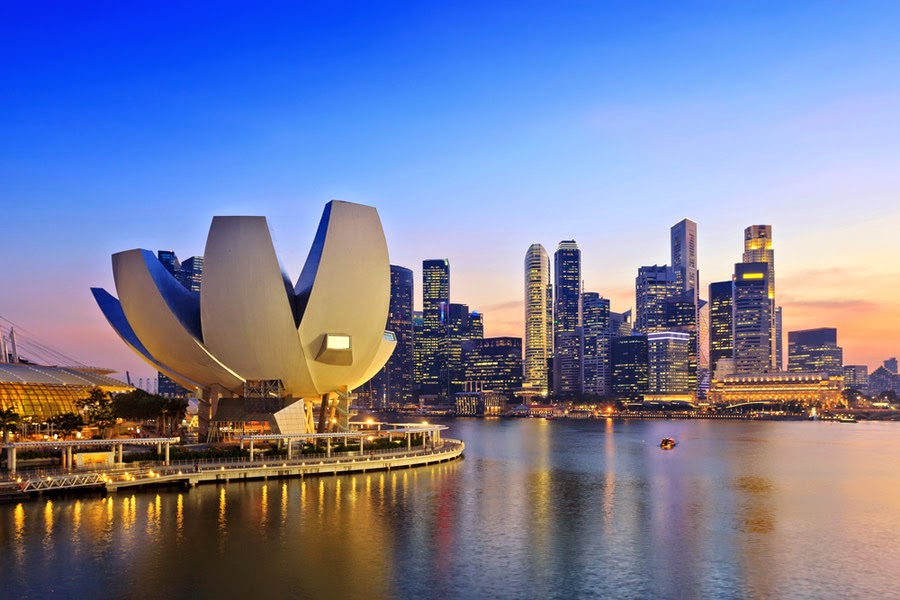
Some images of Singapore show that modernity and development are visible in the order, cleanliness, care of the environment, in the skyline.


By contrast, in countries below the line of developing the disorder, the apparent modernity, poverty and hopelessness are the constants in life. These countries have vast natural resources, huge potential historic resources, but a lack of vision and strong rule, political stability, a shared vision that transcends the ruler or government groups in power, hinder progress safely and securely. Their destination is the failure (the ship sinks, crashing against the rocks or remains adrift)
As a final thought, it can be argued that there are no excuses for avoid the effort to get the development of a country. The attribution of responsibilities to others is one sign of incompetence from seudo leaders, are excuses to justify their predatory acts against their peoples. Anyone cannot be guiding an enormous aircraft carrier; anyone cannot be ruler of a country unless the elected destination was failure, misery, moral and spiritual degradation.


The stark reality of Caracas and other Venezuelan, cities or any other country rich in resources, but poor ethos.

Image from Peru. This scene is more common than is supposed, may be the principal or any inner city.
 

sábado, 16 de mayo de 2015

Progreso de un país, liderazgo, visión-Metáfora portaaviones


La visión y el gobierno firme, condiciones para el desarrollo de un país. Metáfora del portaaviones

Introducción


El día 23 de marzo de 2015 falleció Le Kuan Yew, llamado el “padre fundador” del Singapur moderno; que llegó al poder en 1959 y convirtió a este pequeño territorio en un gigante en términos de desempeño económico y desarrollo. Para muchos fue un visionario y líder con mano férrea, para otros un gobernante autoritario. Para todos es innegable la capacidad de conducción y los resultados logrados.

El desarrollo de un país es el santo grial de los gobernantes y los pueblos, para ello es necesario contra con elementos previos básicos, sin los cuales esta condición es una locura oí un deseo desmesurado. 

Los gobernantes deben ser líderes, con una visión de grandeza que se traslada a sus actos personales y de gobierno, con un pueblo orientado que comparte su  visión de grandeza y  que además es seguidor que comparte sus ideas, asume compromisos y se alinea de manera férrea y consistente con los grandes objetivos. En resumen, el líder y el pueblo gobernado deben compartir un ethos nacional de grandeza de desarrollo, de trabajo, de cooperación.

El crecimiento económico a través del empleo óptimo y planificado de los  recursos o riquezas naturales o históricas que posee el país. Las riquezas naturales son los mares, campos agrícolas, minas, bosques, yacimientos de hidrocarburos, reservas naturales, las riquezas históricas o culturales son los centros históricos que sobreviven a los pueblos que en el pasado construyeron sus civilizaciones.

La formación, desarrollo  y uso de las capacidades plenas de la población del país; con lo que será posible emplear sabiamente y con eficiencia los recursos disponibles, para lograr el crecimiento económico que servirá de sustento al desarrollo.

Excepcionalmente se presentan casos en los que las riquezas naturales o históricas no existen, pero el ethos de grandeza supera esta limitación con el despliegue inmenso de la capacidad creativa de su gente y lograr crear la riqueza, material e inmaterial, que apoya el crecimiento y por ende el desarrollo. Estos pueblos tienen como destino el desarrollo y un futuro de prosperidad para su población. El caso más notorio es el de Singapur, quizás el único en la era moderna o antigua.

Son numerosos  los casos en que las riquezas  existen sin que haya al mismo tiempo la voluntad, capacidad o imaginación para emplear el potencial oculto en ellos. Son países atrasados, cuyo destino es incierto.

Un portaviones es una nave con proporciones inmensas en todo sentido: la masa del buque, el combustible que permite el desplazamiento, la tripulación, la complejidad de las relaciones entre la tripulación y los jefes, la necesidad de contar con una ruta y un propósito. Es necesaria la presencia de un jefe que además de conocer totalmente las características de su nave, de su tripulación, las oportunidades y amenazas del entorno, las fortalezas y debilidades de su nave y gente, ejerce con eficiencia y eficacia su rol de líder. La debilidad o carencia de los atributos determinará el fracaso de la misión, el retorno a casa sin lograr objetivos o simplemente la destrucción. En cierto sentido, dirigir un gran portaviones es como dirigir un país.


La situación singular de Singapur

El asombro que causa la situación de Singapur conduce a preguntar ¿Por qué lograron este nivel de desarrollo¿ ¿Con qué recursos o factores lo ha conseguido? ¿Cómo lo hicieron?

La respuesta es sencilla y se orienta directamente a la conducción del país, si entendemos que un país es como una nave. Esta navío bien construido, tiene una tripulación ordenada, disciplinada, consciente de sus roles, que sigue escrupulosamente la reglas impuestas por un capitán o guía. Estas reglas no son arbitrarias pues obedecen a la necesidad de llegar a una meta, alcanzar un destino colectivo, social, no personal ni útil únicamente para el capitán.

El guía, además de carisma y credibilidad, tiene un trato justo y apropiado con la población, actúa de manera coherente cumpliendo él mismo las reglas que son validadas para la tripulación, conoce el rumbo, conoce los peligros que se presentan cuando se desvían de la ruta , y lo más importante , conoce el destino y la razón por la que se dirigen hacia allá.

Singapur  es como un portaviones, bien construido, bien dirigido, con una tripulación altamente capacitada que conoce su rol, su lugar en el conjunto, que confía en su líder, que conoce su destino. El gran capitán de esa nave llamada Singapur fue Lee Kuan Yew, quien no solo creó y diseñó esta nave, sino que definió con claridad el destino y la ruta que debía seguir.


Existen los atributos de visionario reconocido por muchos y el carácter de autoritario atribuido por otros, en el siguiente artículo se demuestra que la visión y el autoritarismo, que corresponden a la  firmeza y coherencia en los asuntos de gobierno, no son opuestos, por el contrario, ambos son necesarios y funcionales  siempre que esté presente el ethos de grandeza nacional.

En la gráfica 1 se muestra que la visión y el autoritarismo se complementan   cuando la visión es de grandeza (líder visionario, autoritario); cuando  no existe la visión pero si el autoritarismo, los resultados no son los que se esperan en términos de crecimiento o desarrollo.


Se muestra algunos países en función de los grados de la visión y desarrollo, se indica también la línea de desarrollo. Por encima de esta línea la visión regula o limita las condiciones negativas que pudieran aparecer en función del autoritarismo. Singapur y Corea del Sur fueron organizados por líderes con visión y autoritarismo, ambos son desarrollados. Países  con menor autoritarismo pero con un visión definida de lo que quieren también encuentran por encima de línea de desarrollo (Alemania, Chile, Israel, USA).

En la parte inferior se observa que países con diferente grado de autoritarismo pero carentes de una visión no logran el desarrollo deseado. El crecimiento económico puede estar presente, aunque es claro que la solo la venta de bienes y servicios no mejora  las condiciones de una sociedad.


En la gráfica 3 se puede observar que son los principios , las normas, el cumplimento de las leyes lo que explica también los resultados de una visón y un gobierno fuerte; estos principios  van más allá de la persona o líder que eventualmente estuviera a cargo de la país. En los países no desarrollados, están ausentes los principios a nivel de personas  o instituciones, solo son declaraciones  formales liricas, más no impulsores morales de acciones correctas. Los caudillos, cabecillas de revueltas, se sucede unos a otros y nunca se sabe a dónde van. Los actos de gobierno no se guían por principios sino por dogmas,  creencias creadas e impuestas por los falsos  líderes. Se creen predestinados, enviados del cielo, reconstructores de la patria, salvadores del pueblo y mucho más.  Esta situación equivale a de una nave pirata en que la ambición por el botín genera motines continuamente, cada uno quiere ser el dueño de la fortuna, por ello andan continuamente a la deriva o cambiando de rumbo. Un viento favorable puede conducir en apariencia la nave pirata la puerto deseado, independientemente  de quien sea el capitán, cuando se acaba vuelve el descontrol y la incertidumbre.

(imagen de buque pirata)

Hace varios años que Lee Kuan Yew ya no era jefe de gobierno pero sus sucesores conservan su visión y mantienen el rumbo de su nave. Solo en caso que un loco, esquizofrénico o adicto a alucinógenos ocupe el cargo de jefe de estado en Singapur, la nave se estrellará y se irá a pique.


La gráfica 4 confirma la asociación entre el liderazgo, el seguimiento de principios, la visión, la firmeza del gobierno y por ende, el desarrollo del pueblo


En las imágenes que  se muestran de Singapur se observa que la modernidad y desarrollo se hacen visibles en el orden , la limpieza, el cuidado del ambiente en el perfil de la ciudad.


Por el contrario, en países debajo de la línea de desarrollo, el desorden, la modernidad aparente, la miseria  y desesperanza son las constantes en la vida. Estos países tienen inmensa riquezas  naturales, inmensos potencial en recursos históricos, pero la falta de la visión y gobierno firmes, estables, con una visión compartida  que trasciende al gobernante o grupos en el poder, impiden avanzar con seguridad y firmeza. Sus destino es el fracaso (se hunde el buque, se estrella contra las rocas o permanece  a la deriva)

Como reflexión final, se puede argumentar que no existen excusas para lograr el desarrollo de un país. La atribución de responsabilidades a terceros es solo signo de incompetencia de los seudolíderes,  excusas para justificar sus actos depredatorios en perjuicio de sus pueblos. Cualquiera no puedes ser el que guía un enorme portaaviones, cualquiera no puede ser gobernante de un país salvo que el destino sea el fracaso, la miseria, el envilecimiento moral y espiritual.

Algunas imágenes de Caracas. La cruda realidad de Caracas y otras ciudades venezolanas, o de cualquier de otro país rico en recursos, pobre en el ethos.


Imagen del Perú: esta escena es más común de lo que se supone, puede ser la capital o cualquier ciudad del interior.

Si Singapur pudo llegar al nivel de desarrollo y prestigio actual a pesar de muchas circunstancias adversas, ¿porqué  no puede hacer lo mismo una país que tiene  un gran territorio, muchas riquezas naturales, mucha historia, una gran población?